
[20:09, 3/24/2026] N Chaitanya Balasore: Soon Passengers Can Change Train Boarding Station Up to 30 Minutes Before Departure
Railway Aims Refunds to Curb Last-Minute Speculative Bookings and Ensure Tickets for Genuine Passengers at No Extra Cost
The Automobile Industry Can Now Design Specialized Containers to Carry Salt and Automobiles
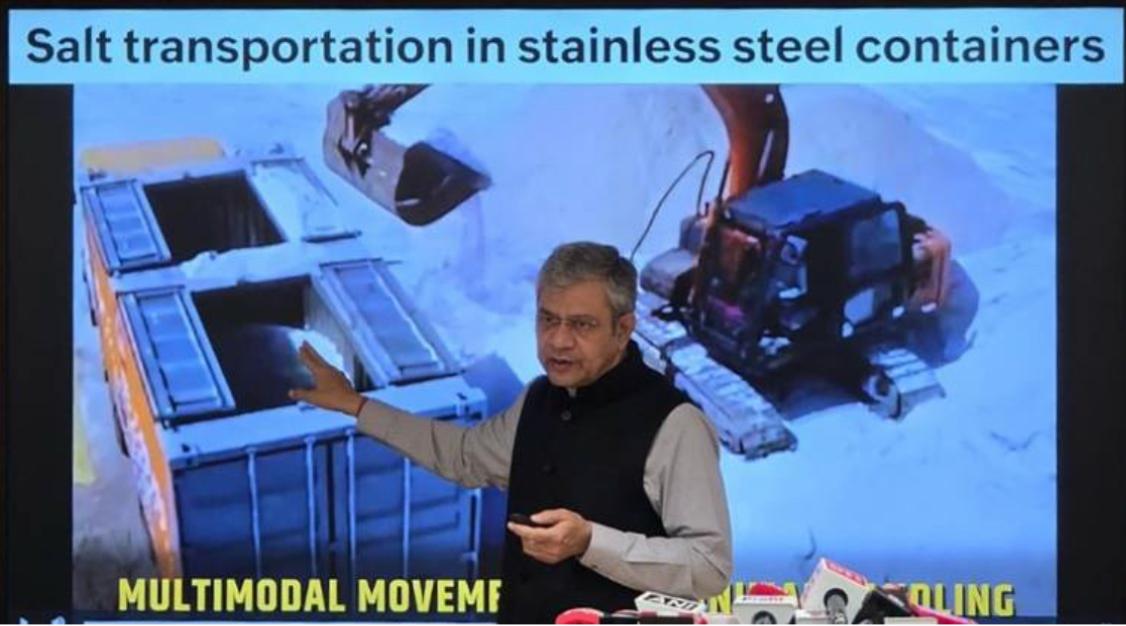
Railways Introduces Corrosion-Resistant Stainless Steel Containers with Top-Loading and Side-Discharge Mechanism to Boost Its Share in Salt Transportation
Seven Key Changes to Construction Norms Announced to Strengthen Project Quality, Accountability, and Timely Delivery
Posted On: 24 MAR 2026 5:42PM by PIB Delhi
Union Minister for Railways, Information & Broadcasting and Electronics & Information Technology, Shri Ashwini Vaishnaw, today announced that in line with Indian Railways’ resolve to undertake reforms during 2026, five new reforms have been approved. With the approval of these new reforms, the total number of reforms for the year 2026 has reached nine.
Shri Ashwini Vaishnaw said that under the ongoing “Reform Express” initiative, four reforms had already been announced and five new reforms are being introduced. Out of the five new reforms, two are related to cargo, one to construction, and two to passenger convenience.
Reform in Salt Transportation
Speaking on reform number five, which focuses on salt transportation, Shri Vaishnaw said India is one of the largest producers and exporters of salt in the world. The three major producing states are Tamil Nadu, Gujarat, and Rajasthan. Out of nearly 35 million tonnes of salt produced annually in India, about 9.2 million tonnes per annum are transported by railways, reflecting a significant untapped opportunity.
The Union Minister noted that the modal share of railways in salt transportation varies by use – approximately 25 per cent for industrial salt and around 65 per cent for salt meant for human consumption. He added that 62 per cent of all rail-based salt traffic covers distances of 1,000 to 2,500 kilometres, making it a segment well-suited for rail movement.
He said detailed consultations were held with salt producers and transporters to understand the challenges. The study identified key issues, including unsuitable wagon design, corrosion of wagons caused by salt, water seepage in open wagons despite tarpaulin covers, and multiple handling stages leading to higher costs and losses.
To address these issues, a stainless steel, top-loading and side-discharge container system has now been successfully developed. The container is made of stainless steel to prevent corrosion, and is equipped with top-loading flaps and a hydraulic side-discharge mechanism, allowing easy unloading into trucks at the destination
[21:38, 3/24/2026] N Chaitanya Balasore: It is factually incorrect to say that modified refund rules will be an extra burden on passengers.
As a step towards transparency, to inform passengers in time whether their tickets are confirmed or not, Railways, under continuous reforms, has increased the chart preparation timing from 4 hours to 9–18 hours before departure. This has provided clarity to passengers travelling from distant locations regarding their journey.
As part of improving passenger experience, along with the change in chart timing windows, the refund rules have also been revised, with no additional cost payable (No extra cost).
This transparent reform not only provides timely clarity to passengers but has also tightened action against illegal ticket agents.
Passengers will now be ab…
About the Author