
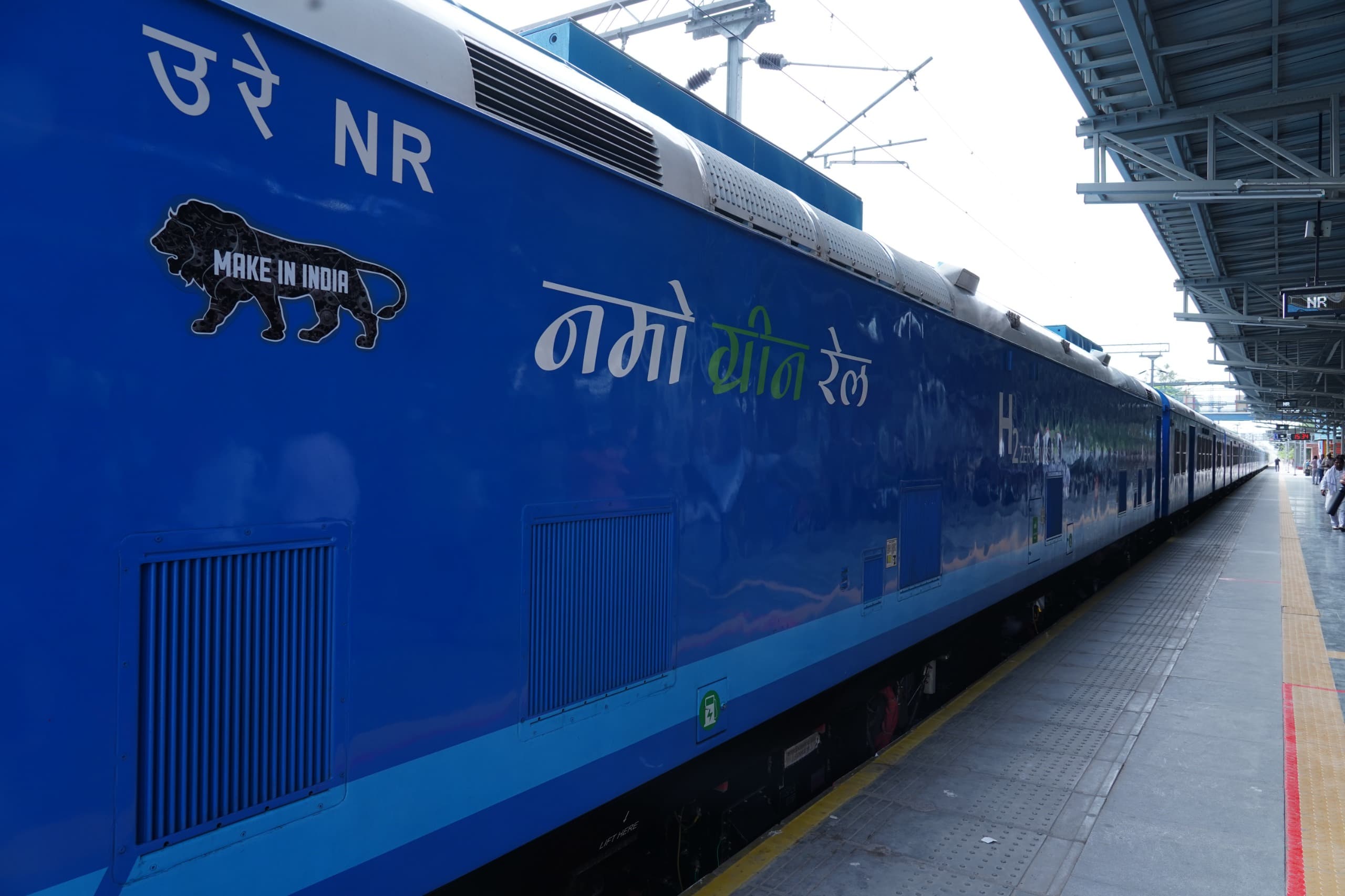
Indian Railways is entering a new era of clean and sustainable transportation. Hydrogen fuel cell technology has emerged globally as a promising alternative to fossil fuel-based traction systems. India’s first indigenous hydrogen-powered train marks an important step in adopting this next-generation technology.
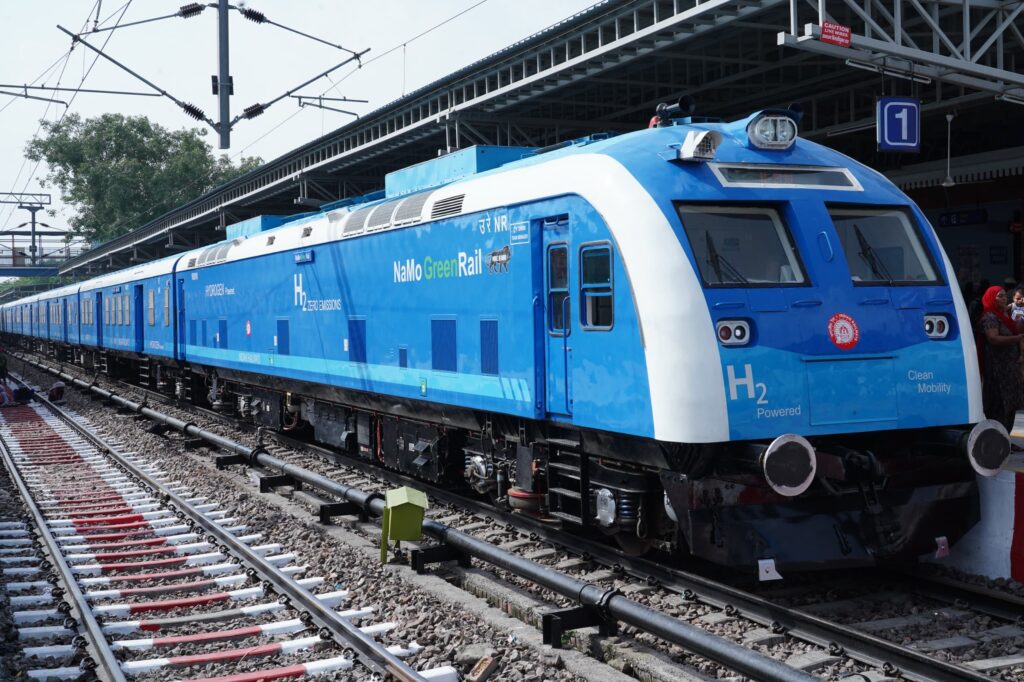
It is a locomotive that generates its own electricity onboard using hydrogen. With the inauguration on 17 July 2026, the hydrogen fuel cell-powered train is set to begin operations.
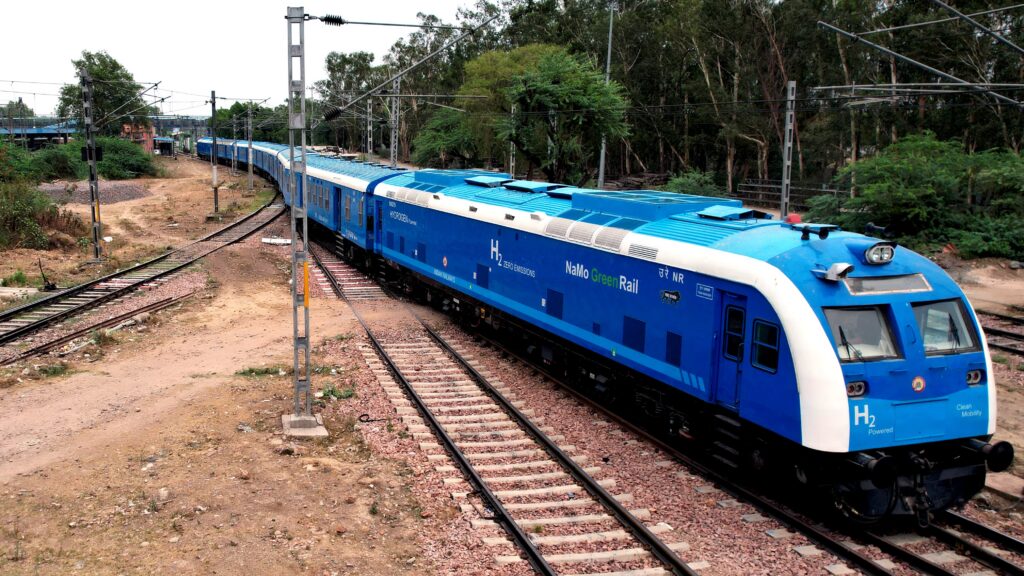
It will run on the Jind-Sonipat section of the Northern Railway. The project combines advanced propulsion technology with dedicated hydrogen storage, refuelling and operational infrastructure. It will demonstrate the feasibility of clean rail transportation in India. Developed as a pilot initiative, the project reflects Indian Railways’ commitment to innovation. It also advances energy efficiency and environmentally responsible transportation.
With this, India joins a select group of countries exploring hydrogen-powered rail transportation. These include Germany, Japan, China and the United States. As the technology remains at a nascent stage, the project will provide valuable operational experience. This will support future applications of hydrogen-powered mobility in the railway sector.
Inside India’s First Hydrogen Train
The hydrogen train project has been developed in accordance with design approval and technical specifications prepared by the Research, Design & Standards Organisation (RDSO). Designed and developed entirely in India, the project demonstrates the vision of Atmanirbhar Bharat.
Key Features of the Hydrogen Powered Train on the Jind- Sonipat Section
10-car hydrogen fuel cell-based trainset.
Powered by a 1200 kW hydrogen fuel cell propulsion system.
Approved to operate at a maximum speed of 75 kmph with a design speed of 110 kmph.
Capacity of Around 2,600 Passengers.
Developed from the design stage through prototype manufacturing.
It will connect Jind Junction, Gohana Junction and Sonipat while serving intermediate stations.
Proposed halts include Jind City, Pandu Pindara Junction, Lalit Khera Halt, Bhambhewa, Isapur Kheri Halt, Butane Halt, Khandrai Halt, Rabrah Halt, Lath Halt, Mohana, Barwasni Halt and Sonipat New.
Technology Behind the Train
Hydrogen fuel cell technology produces electricity through a chemical reaction using hydrogen. The primary energy source is a Proton Exchange Membrane Fuel Cell (PEMFC). This is a fuel cell that generates electricity by reacting hydrogen and oxygen across a proton-conducting Perfluorosulfonic Acid (PFSA) polymer membrane. The process produces only water vapour and heat as byproducts. Hydrogen is a high-energy fuel, 120 MJ/Kg (megajoules per kilogram) in comparison to diesel, which is 43 MJ/Kg. It is low maintenance with a manageable carbon footprint. This makes hydrogen the cleanest propulsion technology currently available for rail transport. To support this, Indian Railways has established dedicated infrastructure.
Hydrogen Infrastructure
The country’s largest railway hydrogen storage and refuelling facility has been established at Jind, Haryana. The indigenous facility stores nearly 3,000 kg of hydrogen at a time. It will support hydrogen-powered train operations. The Petroleum and Explosives Safety Organisation (PESO) has granted the required licence. The licence covers storage and dispensing of compressed hydrogen gas at the site. The hydrogen ecosystem has been designed in accordance with internationally accepted standards. This includes NFPA-2 (National Fire Protection Association) and ISO (International Organisation for Standardisation) 19880 Series. The entire system underwent an…
About the Author